More than reading a chart
Why children’s eye exams matter
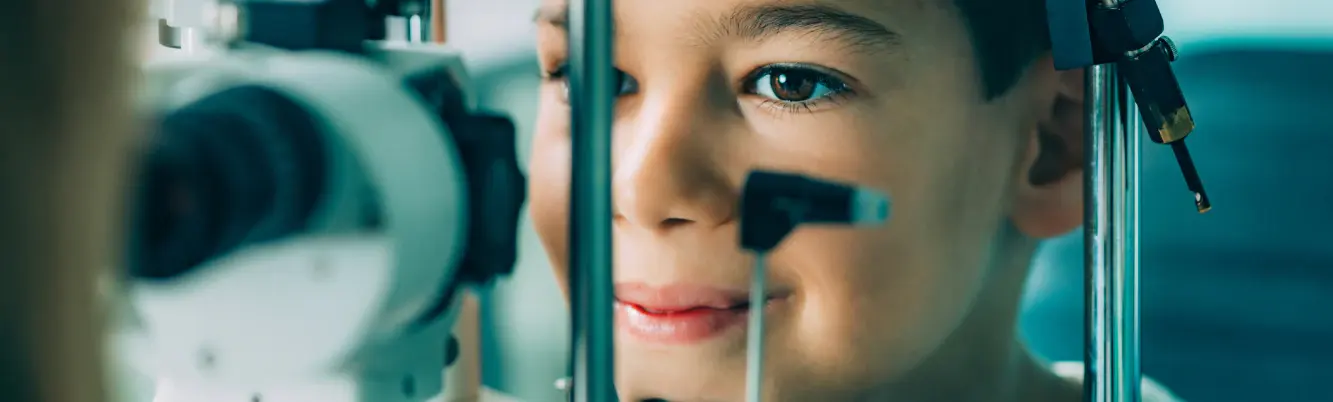
Clear sight is only one part of children’s vision. A comprehensive exam also looks at how their eyes focus, align, work together, and support everyday learning.
- 01
Vision supports learning
Reading, writing, tracking a moving object, and shifting focus from desk to board all depend on more than simply seeing clearly.
- 02
Children may not notice a problem
A child can assume everyone sees the way they do, especially when one eye sees better than the other or blur has developed gradually.
- 03
Early years matter
Finding a prescription, focusing, alignment, or eye-health concern early creates more opportunity to support healthy visual development.
A parent’s guide
When should my child have an eye exam?
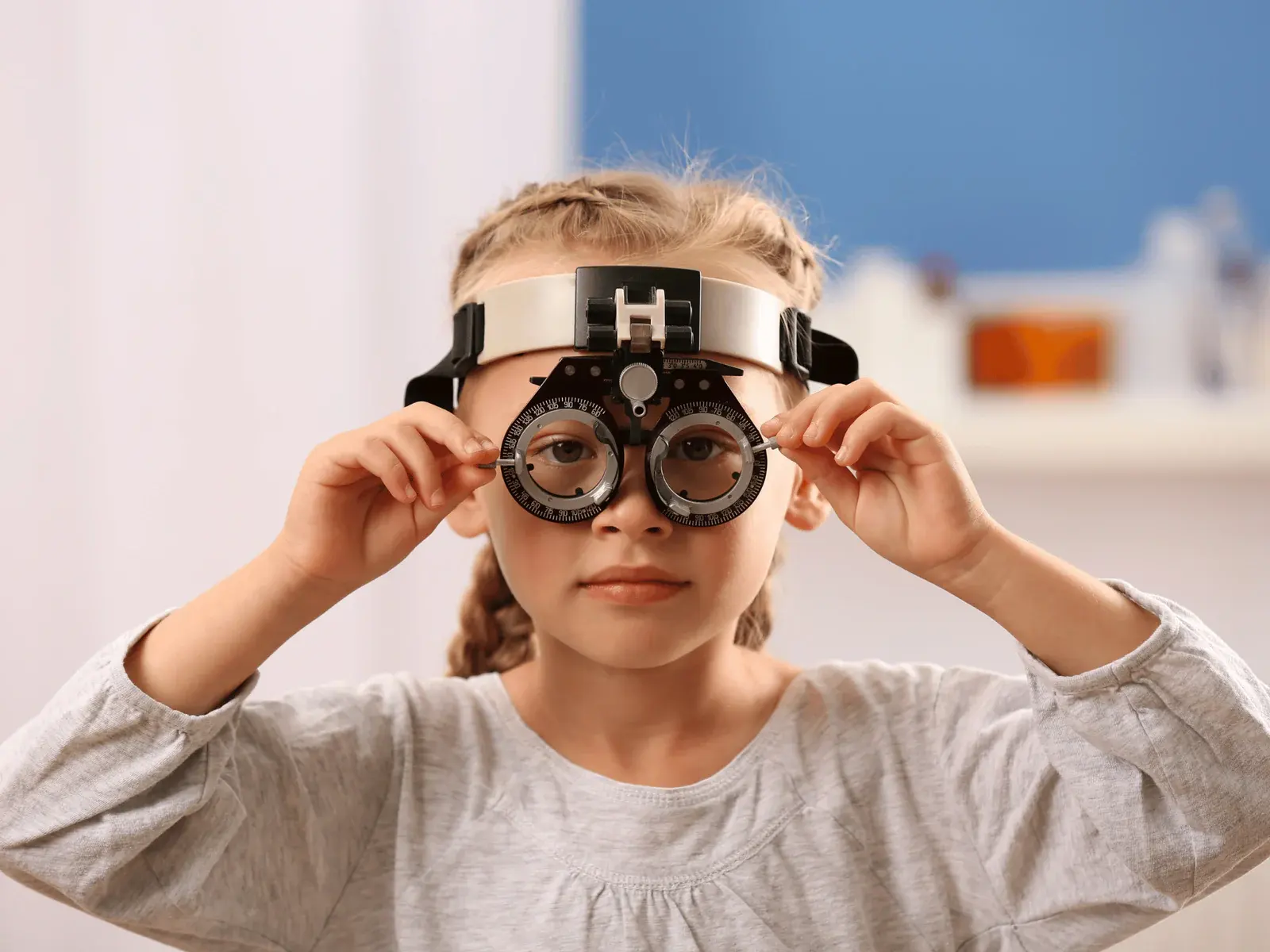
Routine exams follow the stages of visual development. If you notice a concern at any age, there is no need to wait for the next milestone.
6–9 months
A first look
An infant eye exam checks whether the eyes are healthy and beginning to work together as expected.
Ages 2–5
The preschool years
At least one exam during these years can find concerns before they begin affecting classroom learning.
Before school
Ready to learn
A comprehensive exam gives parents a clearer picture of how their child sees, focuses, and uses both eyes.
Ages 6–19
Every year
Annual exams are recommended through the school years because vision and prescriptions can change as children grow.
General timing follows guidance from the Canadian Association of Optometrists . Dr. Fong may recommend a different schedule based on your child’s needs.
Inside the exam
What Dr. Fong checks
The visit is adapted to your child’s age and comfort. The goal is a complete picture of both vision and eye health—not a pass-or-fail test.
Vision and prescription
Nearsightedness, farsightedness, astigmatism, and differences between the two eyes.
Eye alignment
How the eyes point and move, including signs of strabismus or an eye turn.
How the eyes work together
Eye teaming, depth perception, and the coordination needed for comfortable near work.
Focusing ability
How comfortably the eyes change and maintain focus at different distances.
Amblyopia
Reduced vision in one eye—often called lazy eye—which may not be obvious at home.
Overall eye health
An age-appropriate assessment of the structures and health of the eyes.
Made for young patients
A visit that meets children where they are
A positive first experience can shape how a child feels about eye care for years. Dr. Fong keeps the visit calm, conversational, and appropriate for each child’s stage.
No memorized letters. No pressure to give a “right” answer.
Pictures, lights, movement, and objective measurements allow Dr. Fong to gather useful information even when a young child is shy, uncertain, or not yet able to describe what they see.
Two related kinds of care
An eye exam comes first
Every child benefits from routine eye care. Myopia management becomes relevant when short-sightedness is developing or progressing.
Children’s eye exam
Understand how their eyes are developing
A comprehensive assessment of vision, prescription, eye coordination, focusing, alignment, and eye health.
Myopia management
Slow a progressing prescription
A personalized plan for children whose nearsightedness is worsening, using evidence-based options selected after assessment.
Explore myopia managementOne exam every 12 months is OHIP-insured through age 19.
This applies to children and young people who are eligible for OHIP. Glasses, contact lenses, myopia-management products, and other materials are separate. Bring a valid Ontario health card, and ask us if you are unsure what applies.
Coverage information: Ontario Association of Optometrists .
Good to know
Questions parents often ask
Their next step
Give their growing eyes a thoughtful start.
Book a children’s eye exam with Dr. Fong at Boardwalk Eye Care in downtown Cambridge. We will make the visit clear for you and comfortable for your child.
Book a Children’s Eye Exam