Myopia management technology at Boardwalk Eye Care in Cambridge, Ontario

Eye Care in Cambridge, ON

Myopia Management

Myopia management uses personalized treatments to slow the progression of childhood nearsightedness — not simply provide stronger glasses each year. At Boardwalk Eye Care, care is guided by Dr. Sarah Fong, O.D. , with a personalized plan for your child, serving Cambridge and the Waterloo Region.

Book a Myopia Assessment

Now accepting new patients.

Or call (519) 622-1473 · 30 Main Street, Cambridge

Why it matters

Why managing myopia is worth it

Myopia isn’t only about seeing the board clearly. It often begins in childhood and may worsen as the eye grows, so slowing progression can protect more than today’s vision.

1 in 2

people worldwide may be myopic by 2050

30–60%

approximate slowing reported across several evidence-based approaches

Results vary by child, treatment, adherence, study, and measurement method. This range is not a guarantee or a direct product comparison.

Genetics play a role, while prolonged near work and spending less time outdoors are also associated with childhood myopia. Starting earlier can leave more time for progression, and higher myopia is linked to greater lifetime eye-health risk.

Source: Vision Center, “Myopia: Statistics, Trends, Causes, & Solutions” , updated March 24, 2025.

From childhood vision to lifelong eye health

  1. 01

    Myopia can begin in childhood

    Distant objects become blurry as the eye grows too long from front to back.

  2. 02

    It may progress while the eye grows

    An earlier start can leave more growing years for the prescription to deepen.

  3. 03

    Higher myopia carries greater lifetime risk

    Slowing progression now is an investment in your child’s future eye health.

Eye-health risks linked to higher myopia

  • Retinal detachment
  • Myopic maculopathy
  • Glaucoma
  • Cataracts

For parents

Signs your child may be short-sighted

Children rarely say their vision is blurry — they assume everyone sees the way they do. These everyday signs are worth a closer look.

  • Squinting to see far away

    Narrowing the eyes to bring distant objects — a TV, a sign, a teacher’s board — into focus.

  • Sitting very close

    Moving right up to the television or screen, or lowering their head close to a tablet.

  • Holding things close

    Bringing books and devices unusually near to the face to read comfortably.

  • A family history

    A child is more likely to become short-sighted when one or both parents are, too.

Even without obvious signs, a regular comprehensive eye exam is the most reliable way to catch myopia early, when there’s the most room to act.

Dr. Sarah Fong performing a pediatric eye exam at Boardwalk Eye Care in Cambridge, Ontario

Ways we slow myopia

Myopia control isn’t one-size-fits-all. Explore how each approach works and the products Dr. Fong can consider when building your child’s plan.

Myopia-control spectacle lenses

Spectacle lenses that look like ordinary glasses but use specialized optical designs to help slow how quickly myopia advances.

Available at Boardwalk

HOYA MiYOSMART logo for myopia-control spectacle lenses

HOYA

MiYOSMART spectacle lenses

Essilor Stellest logo for myopia-control spectacle lenses

Essilor

Stellest spectacle lenses
CooperVision Myopia Management logo
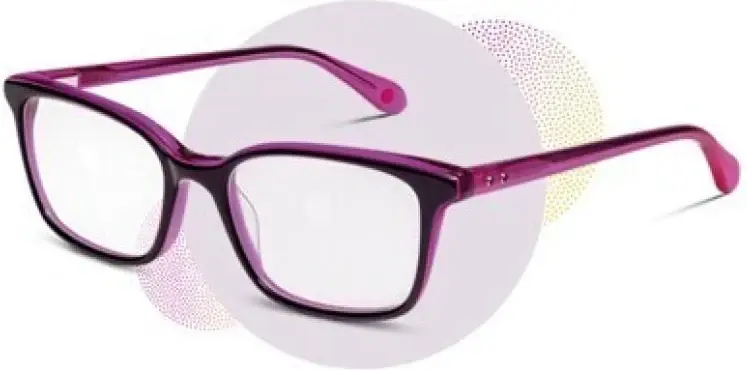
CooperVision MiSight spectacle lens graphic

CooperVision

MiSight Spectacle Lenses

Daytime contact lenses

Soft daytime lenses designed to correct vision while helping slow the eye’s growth — a practical option for many active, sporty children.

Available at Boardwalk

CooperVision MiSight 1 day logo

CooperVision

MiSight 1 day

ACUVUE Abiliti 1-Day logo

ACUVUE

Abiliti 1-Day

Orthokeratology (Ortho-K)

Custom lenses worn overnight gently reshape the cornea, providing clear vision through the day without daytime glasses or contacts while helping slow progression.

Explore Ortho-K

Available at Boardwalk

ACUVUE Abiliti Overnight Ortho-K lenses

ACUVUE

Abiliti Overnight

Paragon CRT Ortho-K lenses

Paragon Vision Sciences

Paragon CRT

BE FREE Advanced Ortho-K Lens System

BE FREE

Advanced Ortho-K Lens System

Low-dose atropine drops

A prescription eye drop used at bedtime that can help slow progression. Dr. Fong selects a controlled concentration for your child and monitors how their eyes respond.

Available at Boardwalk

Labtician logo for low-dose atropine formulations

Labtician

Low-dose atropine formulations

Product suitability and the final treatment choice depend on your child’s prescription, eye health, age, lifestyle, and response over time. Dr. Fong will assess these factors before recommending a plan.

Good to know

Frequently asked questions

Myopia management (or myopia control) is a set of treatments — such as special contact lenses, spectacle lenses, or low-dose eye drops — that aim to slow how quickly a child’s short-sightedness gets worse over time. It does more than correct blurry distance vision: the goal is to limit how far the myopia progresses.

Ordinary glasses and contacts correct blurry vision, but they aren’t designed to influence how fast myopia advances. Myopia-control options both correct vision and aim to slow its progression, which can help lower the long-term risks linked to higher levels of myopia.

Short-sightedness often progresses fastest through the school-age and teenage years, so there can be value in starting sooner rather than later. The right time depends on the individual child — Dr. Fong will assess your child and talk through whether and when to begin.

Myopia management is about slowing progression, not reversing or curing existing short-sightedness. Your child will still have their vision corrected so they can see clearly — the aim is to keep the prescription from worsening as quickly.

There’s no single right answer — the best approach depends on your child’s age, prescription, lifestyle, and how they respond over time. Dr. Fong creates a personalized plan and monitors progress at regular follow-ups, adjusting as your child grows.

Yes — myopia control is an evidence-based area of eye care. Research supports that treatments such as ortho-k, myopia-control contact and spectacle lenses, and low-dose atropine can meaningfully slow how quickly a child’s short-sightedness progresses compared with ordinary glasses alone. Results vary from child to child, which is why Dr. Fong measures progress at regular follow-ups and adjusts the plan.

Myopia usually begins around school age and tends to progress fastest through the childhood and teenage years, so there’s real value in starting early — often once a child is diagnosed as short-sighted, or if they’re at higher risk because a parent is. There isn’t a strict cut-off; Dr. Fong will assess your child and advise whether and when to begin.

In Ontario, OHIP covers an annual eye exam for children and young people up to age 19, and we’ll bill that directly. Myopia-control treatments and materials themselves — such as specialty lenses or drops — are typically not covered by OHIP, though many private and workplace insurance plans contribute. We’ll go over exactly what’s covered and what isn’t before starting, so there are no surprises.

The cost depends on which approach suits your child and how long treatment continues, so we don’t quote a single price up front. During the myopia assessment, Dr. Fong will recommend an approach and our team will walk you through the full cost — including lenses or drops and follow-up visits — so you can make an informed decision.

Next Step

Get ahead of your child’s myopia

Book a myopia assessment with Dr. Fong — she’ll measure where things stand today and build a plan to slow what comes next.

Book a Myopia Assessment
(519) 622-1473 30 Main Street, Cambridge, ON